Since its inception in 2004, BIO-X™ has received over 200 project ideas. 38 of them receive tailor made support from senior experts on e.g. IP-issues, project plans, business development, regulatory issues or strategic contacts.
Eleven projects have so far been selected to receive both funding and the support package. Out of the five that have left BIO-X, four continue to grow in young Uppsala-based life science companies.
|
|
|
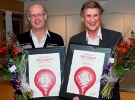
Professor Anders Larsson, Uppsala University Hospital and
Professor Jarl Wikberg,
Uppsala University.Photo: Lisa Reimegård |
The ESBL-project lead by Professor Anders Larsson, Uppsala University and Uppsala University Hospital is developing an alternative to antibiotics for combating ESBL-producing bacteria in the intestines, and hope being able to start clinical trials in 2011.
Libiguin has identified a substance active against several forms of sexual dysfunctions, both the physical ability and the libido, and is now developing the compound into a commercial package.The project is led by Professor Jarl Wikberg at Uppsala University's department of pharmaceutical biosciences.
Three projects were admitted to the BIO-X program, following a call in 2010 for new solutions in diagnostics.
Early diagnosis of bacterial infections The research team led by Professor Per Venge, Uppsala University Hospital, has found a marker in the blood that clearly shows whether the patient has an infection caused by bacteria. The discovery creates the conditions for a quick and reliable point-of-care diagnostic test that distinguishes a bacterial infection from a virus infection. The marker to be measured in the blood is called HNL, which stands for Human Neutrophil Lipocalin. The research team estimates it will attain a level of sensitivity and reliability of over 90 percent.
TailorDose develops a method to customize chemotherapy after the very first treatment, thus avoiding periods of either too high or too low doses. A patented method has been developed at Stockholm University for measuring the exposure to harmful chemicals. This same method is to be further developed in this project, which is led by Dr Per Rydberg, Stockholm University and Karolinska Institutet, in collaboration with Professor Jonas Bergh, Karolinska Institutet.
The third project, led by Associate Professor Tobias Sjöblom, Uppsala University, aims to develop a method for automatic extraction of DNA and RNA from biobank samples and to create a single flow of sample handling that can be quality assured. This project is closely related to the strategic research program U-Can, building a biobank of patient samples taken before, during and after cancer therapy .
Biotechnology solutions to our environmental problems resulted in two projects building upon research results from the Swedish University of Agricultural Sciences, SLU.
|
|
|
|
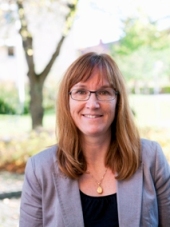
Assoc. prof. Anna
Schnürer, SLU
Photo: Ewa Ahlin
|
A Biogas microbial monitoring kit, able to detect incidents in biogas production before the biogas production is halted, is the goal for Associate Professor Anna Schnürer, SLU Uppsala. She has identified the key bacteria that need to be monitored in the biogas production. From this knowledge the project will develop analysis methods and later a monitoring kit. Once in place, biogas plants may be able to increase its production capacity with 10 - 50 %.
Nitrate leaching from fertilzing is considered as one of our major environmental threats today. Organic fertilizers would reduce the load, and the amino acid arginine has proved to be effective. Arginie availability is however limited, and its costs too high. Professor Torgny Näsholm, SLU Umeå, with a team of researchers from Stockholm University and Luleå University of Technology, have identified a method based on modern gene technology will to create arginine over-producing bacterial strains. The goal is to present a method for industrial production of arginine.
Mast Cell Therapeutics was admitted to BIO-X in late 2008. The project involves the development of effective new forms of treatment tied to mast cells and involves researchers from the Swedish University of Agriculture and Uppsala university hospital.
Exits from BIO-X
Camdia developed highly sensitive techniques for ultra-sensitive biomarker detection, with special emphasis on colorectal cancer. Their results are today incorporated in Olink AB.
ModPro, offering binder molecules that are specifically tailored for each application, got a real take off as a result of the BIO-X project Lab-on-a-Chip/Point-of-Care.
Pain Management developed a new slow release platform for oral delivery of highly potent drugs. The project started a collaboration between one of Uppsala's pharma companies and a research unit of the department for material sciences at Uppsala University.
The use of microdosing, or phase 0 tests, is growing as a way to shorten drug development, by offering pharmacokinetic data from humans at an early stage. Accelerator Mass Spectrometry at Uppsala University makes it possible to measure extremely low levels of active substances and metabolites, at the zeptomol level. The project developed the system’s sensitivity and stability, and supported the development of its business as the company Zeptologix AB.
For further information on BIO-X and on current projects, please contact Dr Erik Forsberg, Uppsala BIO.